Between the 15th and 17th centuries several parish churches were built from scratch or enlarged compared to the previous ones, among them the present parish church of Atzara, dedicated to Saint Antioco the Martyr, whose feast is celebrated on 13 November.
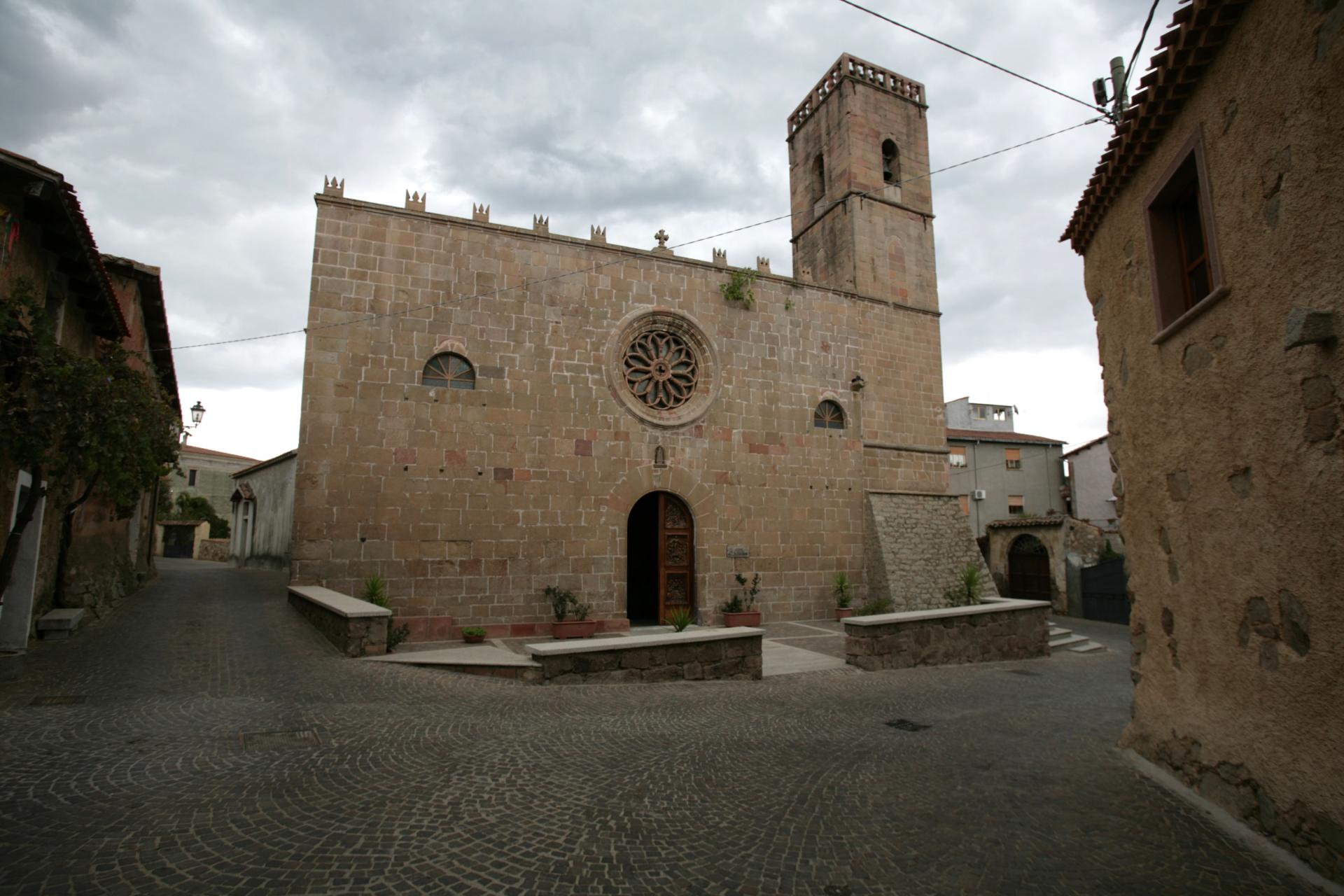
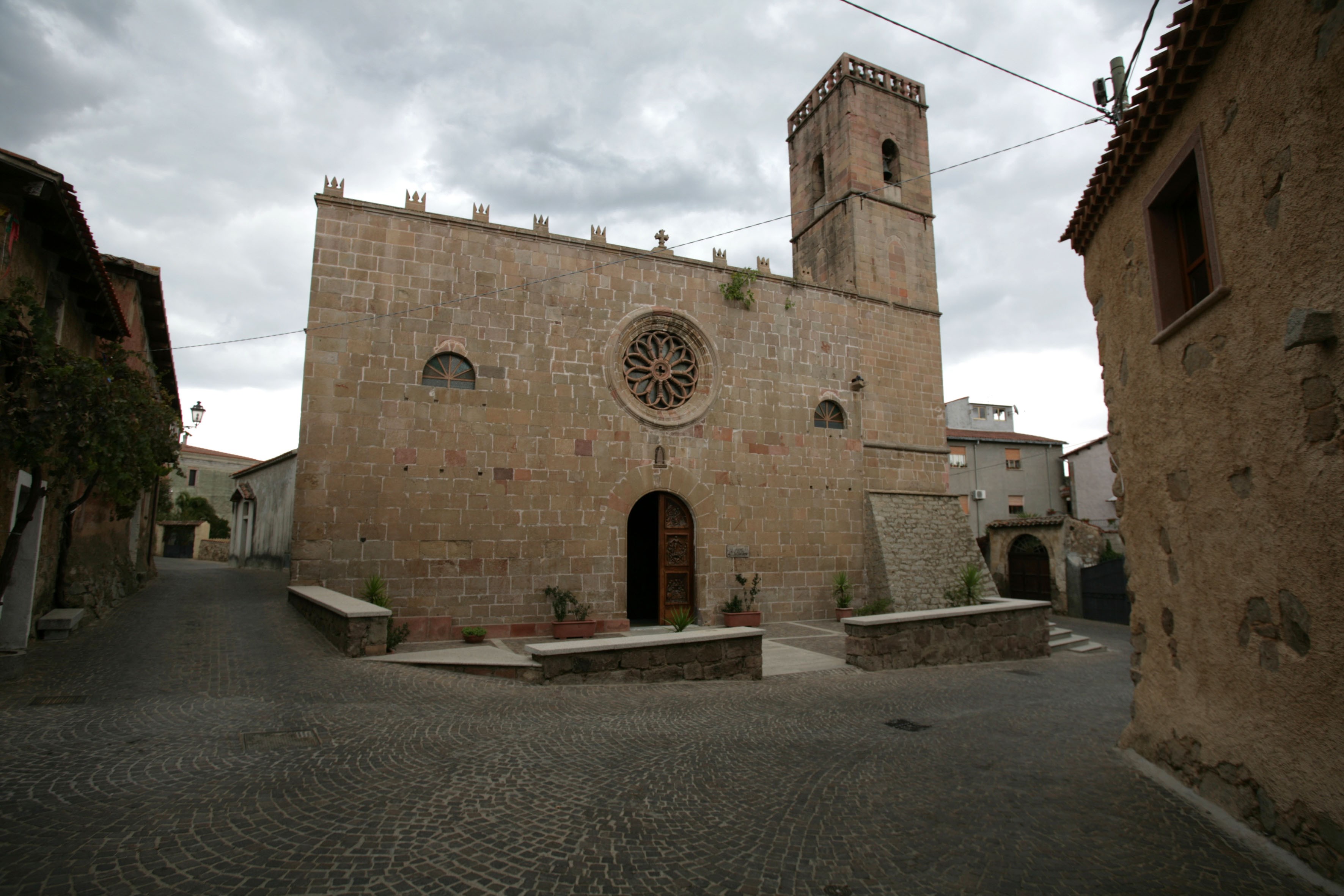
Built at the beginning of the 1500s in Gothic-Aragonese style, it has a façade in trachyte ashlar blocks with an imposing rose window above the entrance portal.
The interior floor plan is divided into three naves, a central one and two side aisles. The apse houses the main altar, while the two side chapels contain two 17th-century wooden altars. The façade is very wide and has a carefully cut masonry facing. The flat top is finished with a cornice on which rest trilobed battlements, also in trachyte. The portal is surmounted by a rose window, typical of the architectural style introduced by the Catalan-Aragonese, with a sunburst pattern of small columns connected by little arches.
Once they had conquered the island, the Catalans spread their tastes and building techniques there. In their churches the square bell towers in the south of the island and polygonal ones in northern Sardinia are immediately recognisable, as are the broad façade decorated with a rose window and the ribs marking the vaults, which call to mind an open umbrella. The bell tower here is square and topped by a stone balustraded enclosure similar to the presbytery enclosure of the nearby sanctuary of San Mauro; it features single-light windows with both pointed and round arches.
A dome bearing a large copper sphere with a cross at its summit, which the bell tower once had, was removed for fear of collapse. Also gone is a small stone sculpture in the shape of a little man, placed on the front right wall of the façade, called “Su Moro sacru”, which served as a drain for rainwater.
Two semicircular windows on the sides light the side aisles. The building consists of three naves: the main one is covered by pointed vaults, while the side ones have round-arched vaults. There are two side chapels and two more next to the presbytery, all with barrel vaults. The main wooden altar, in Spanish style, is now located in the chapel of the Sacred Heart. Among the sacred furnishings, special mention should be made of several precious 16th-century silver pieces, a monstrance of Spanish workmanship and a cross from a Cagliari workshop. The organ, restored in 1995, was built by Giuseppe Lazzari in 1774
Copyright: Fabrizio Galisai per Comunità Montana